Heart Health for Newcomers
Watch this short video to learn about heart health, cardiovascular risk factors, common warning signs, and ways to protect your heart.
Prefer reading? The key information from this video is summarized below.
The ABCDEs of Diabetes and Heart Care
Learn practical steps for reducing cardiovascular risk, including blood sugar control, blood pressure, cholesterol, healthy habits, and medication use.
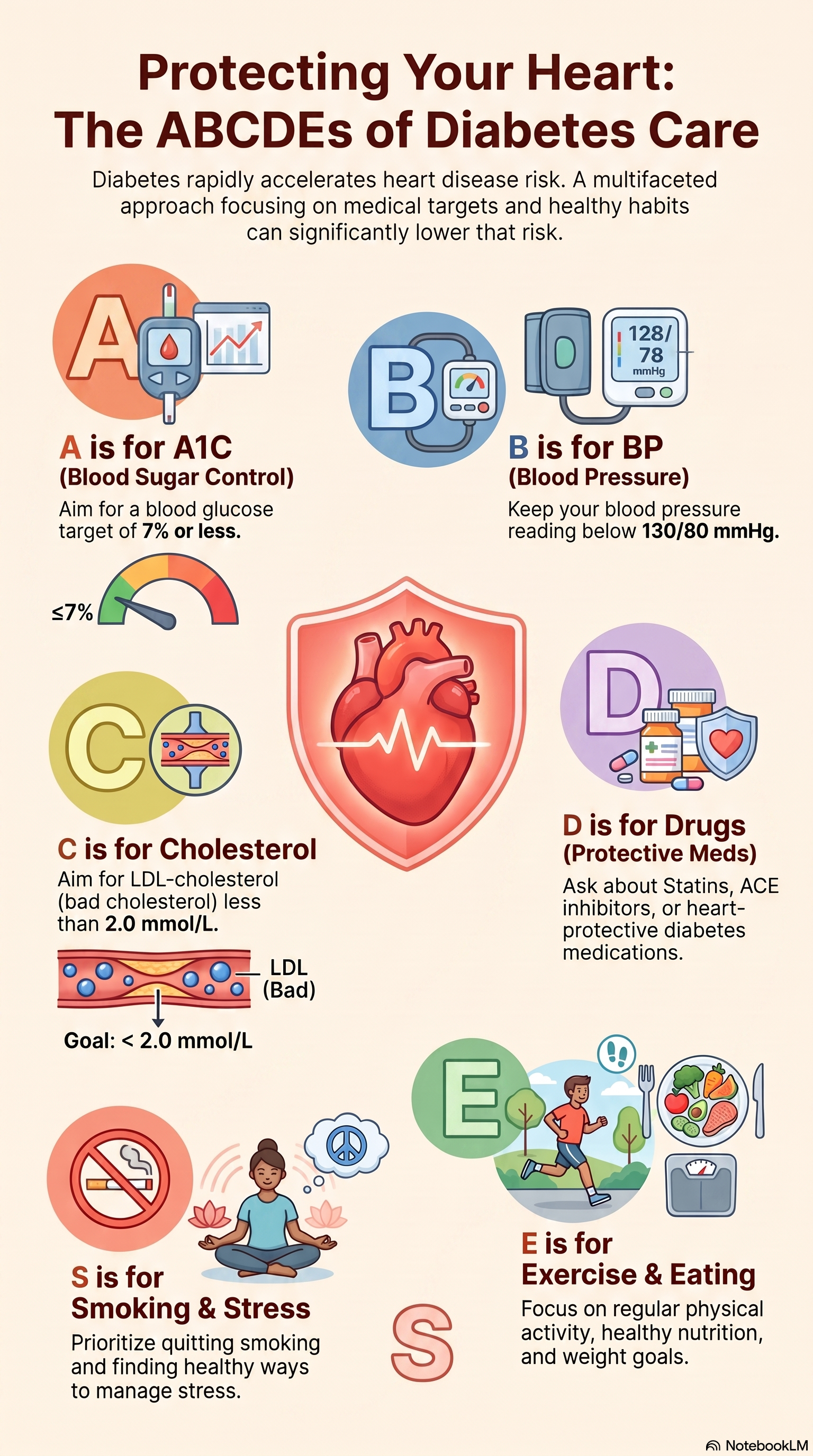 View full infographic ↗
Heart Health
Explore trusted information about heart disease, blood pressure, cholesterol, healthy living, and when to seek medical attention.
Visit resource ↗Why is heart health important?
Your heart and blood vessels carry oxygen and nutrients throughout your body. High blood pressure, high cholesterol, diabetes, smoking, and other risk factors can damage blood vessels over time and increase the risk of heart attack and stroke.
Blood pressure
Blood pressure measures the force of blood against the walls of your arteries. High blood pressure often causes no symptoms, so regular checks are important. A healthcare provider can explain your results and whether lifestyle changes or medication may be needed.
Cholesterol
Cholesterol is a type of fat carried in the blood. Some cholesterol is needed by the body, but high levels of LDL cholesterol can contribute to plaque buildup in the arteries. Blood tests can help assess your risk.
How can I reduce my risk?
Regular physical activity, balanced nutrition, avoiding tobacco, limiting alcohol, getting enough sleep, managing stress, and taking prescribed medications can all help reduce cardiovascular risk.
What tests might I have?
Common heart-related tests include blood pressure measurements, cholesterol and blood sugar tests, an electrocardiogram or ECG, and other tests depending on your symptoms and medical history.
Preparing for a heart health appointment
Bring a list of your medications, write down your symptoms and questions, and tell your healthcare provider about any family history of heart disease, stroke, high blood pressure, diabetes, or high cholesterol.